
The Invisible Employee: What Manual Work Really Costs a 10-Person Company
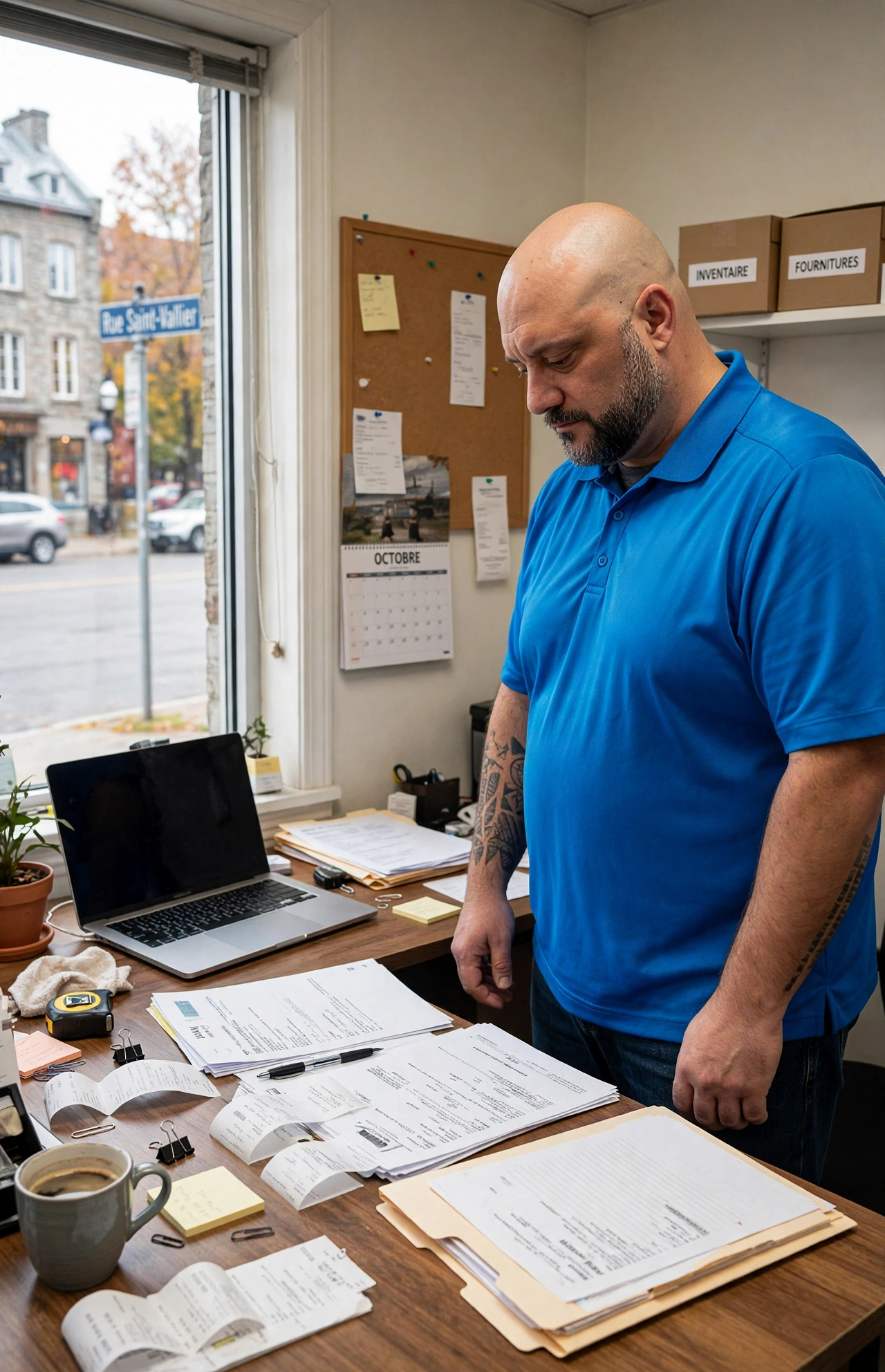
Manual work looks free because nobody invoices you for it. Do the math for a 10-person company and it is not free. You are already paying a full-time salary for it. You just never hired anyone.
The Invisible Employee: What Manual Work Really Costs a 10-Person Company
Manual work has no invoice. That is why owners ignore it.
Nobody sends you a bill for copy-paste. Nobody bills you for chasing a missing invoice. Nobody charges you for retyping the same customer info into three systems. It feels free. It is not free.
I ask owners to do this math with me. Almost every time, the conversation changes.
My assumptions stated plainly
I will not pretend these are statistics. They are assumptions. Change them and the math still works.
Assume a 10-person company. Assume each employee costs $40 per hour, fully loaded. That means wages plus benefits, payroll charges and a share of overhead. Some cost less. Some cost more. $40 is my working assumption.
Assume each person loses 3 to 5 hours per week to manual busywork. Copy-paste. Follow-ups. Scheduling. Fixing errors. Searching for the right version. Use 4 hours as the middle of the range.
Assume 48 working weeks per year. That leaves room for vacation and holidays.
Those are all the assumptions. Everything else is arithmetic.
The math for 10 people
Ten people times 4 wasted hours is 40 hours per week. That is one full-time employee doing nothing but manual busywork.
You never hired that person. You are paying them anyway.
Forty hours times 48 weeks is 1,920 hours per year.
Multiply by $40 per hour. The result is $76,800 per year.
Read that again. $76,800 per year. Not in software. Not in consultants. In payroll, spent on work a system could do.
If you think 4 hours is too high, use 3. That is still $57,600 per year. If you think $40 is too high, use $35. That is still $67,200 per year at 4 hours. The exact number moves. The conclusion does not.
I have seen this pattern in shops, offices and service companies. The work is different. The leak is the same.

You are already spending it
Here is the part owners miss. That $76,800 is not a future cost. It is in your payroll right now. Every week. Disguised as ten people doing their jobs.
So fixing the worst process does not add a new expense. It redirects money you are already spending. One project, scoped to your biggest leak, and those hours come back every week.
I will not put a price on that project here. Every business leaks in a different place, and an honest number needs your actual processes in front of me. That is what my discovery conference is for. We find the biggest leak, we scope the fix, and then you see the real comparison: one project, once, against $57,600 to $76,800 every single year.
Owners often tell me they do not have time for a project. I tell them they are already spending the time. They are just spending it in small pieces, every week, with no end date.

The decision
You have two choices.
Choice one: keep the invisible employee. Accept the $57,600 to $76,800 per year. Accept the errors, the delays and the follow-ups. Accept that your best people spend part of every week doing robot work.
Choice two: fix the worst process first. Pay once to fix it. Get those hours back every week. Then decide if you want to fix the next one.
I recommend choice two. Start with the process that hurts most. Usually it is invoicing, scheduling, follow-ups or data entry. Fix one. Measure the hours. Then repeat.
If you want help finding that first process, that is what I do. Neurotek AI builds automation systems and AI agents for Quebec SMBs. My discovery conference looks at your tools and your workflows, then shows you where the hours are going and what fixing them would cost. Write to me and we will run your numbers together.
Simon Cousineau
Founder of Neurotek AI, an AI automation consultancy helping Quebec SMBs build systems that actually work.
Get in touch →