
PHP2Shell and Dessa: The Flaw That Opens the Web, and the AI Voice You Mistake for a Human
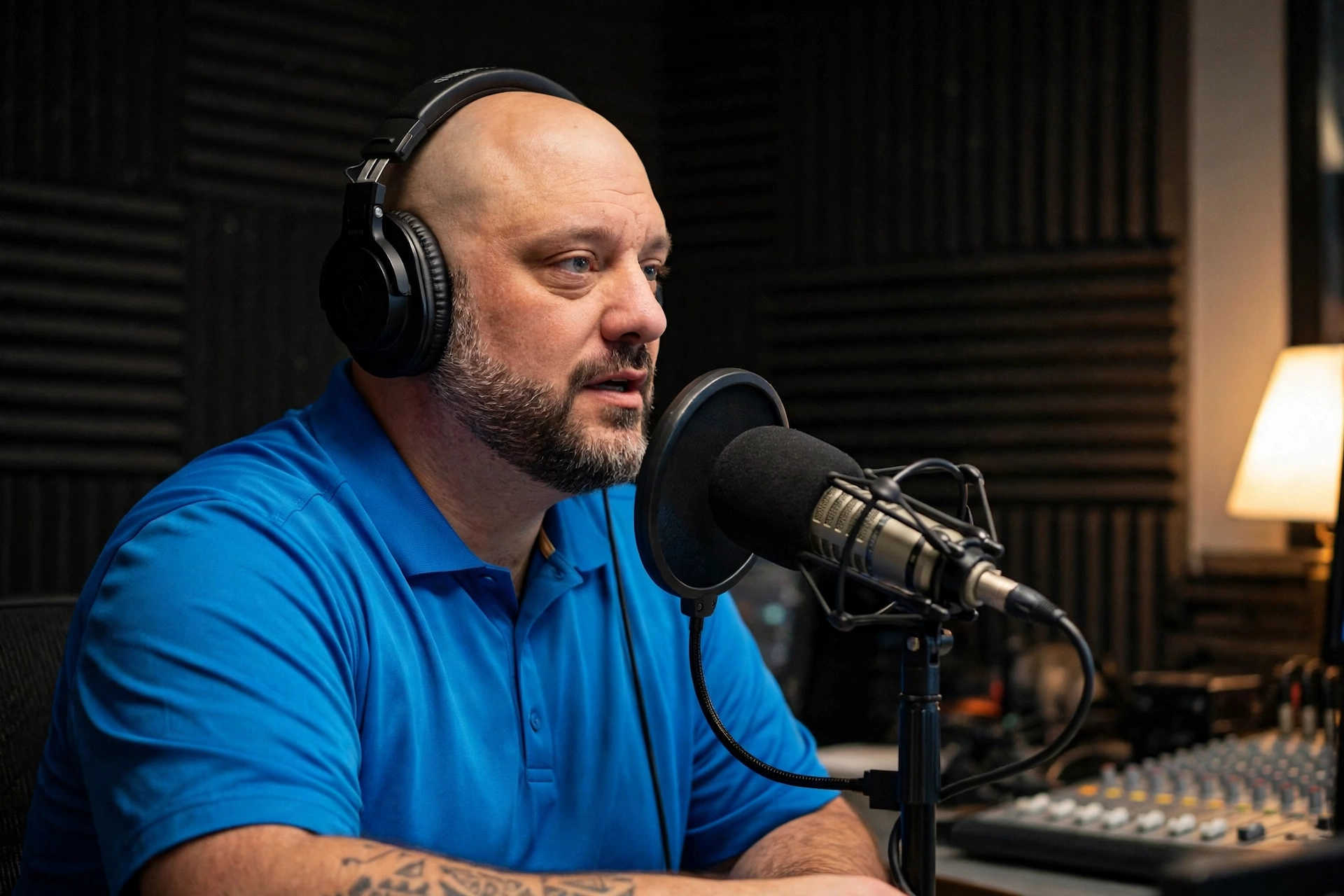
This morning on Cogeco 104.7: PHP2Shell, the critical flaw exposing PHP sites, with the fixed versions, the one question to ask your host and the Law 25 angle. And Block's Dessa, the AI voice trained only on human conversation, which we turned into a studio guessing quiz. Two topics, one thread: everything is moving faster.
This morning, on my AI column at Cogeco Outaouais 104.7 FM, I brought two topics instead of three. Not for lack of material. Because both deserved the time.
The first is a critical security flaw affecting a huge part of the web. The second is an AI voice so human that we turned it into a studio quiz: guess who is the AI, guess who is the human.
Two very different stories. One conclusion at the end.
Topic 1: PHP2Shell, the wide open door
PHP is the language behind a huge share of websites, including most WordPress sites. When a flaw is found in PHP itself, it is not one site that is exposed. It is everything running on top of it.
That is exactly what just happened. On October 21, the PHP security team released emergency fixes for two critical flaws, CVE-2026-109618 and CVE-2026-109619, grouped under the name PHP2Shell. The Canadian Centre for Cyber Security issued its alert AL26-026 the same day.
What you need to understand, without the jargon:
- Both flaws are rated 9.2 out of 10 in severity.
- An attacker does not need a password. They can run code on a vulnerable server, before your site's own code even starts.
- The fixed versions, released October 21, are PHP 8.5.12, 8.4.27, 8.3.36 and 8.2.35.
- If your site runs PHP 8.1 or older, there is no official fixed release. That is a problem on its own.
- On October 23, a third flaw was added, CVE-2026-115560. It is not covered by the October 21 fixes. The recommended temporary measure: disable `session.upload_progress`.
Sites people here know were taken offline as a precaution in the days around the announcement, including Government of Canada, STM and SAQ sites, according to reporting at the time. Not because they were broken. Because closing the door while you check was the right call.
And the AI angle in all this? Here it is. Finding flaws, testing them and scanning the web at scale no longer happens at human speed. Attackers are already scanning massively. That is the accurate way to put it: attackers are scanning. It does not mean everyone has been compromised. It means the window between "the flaw is public" and "someone tries it on your site" has become very short.

What to do if you have a website
One question to ask your host, today:
"Which PHP version is my site running, and has it been updated since October 21?"
If the answer is 8.5.12, 8.4.27, 8.3.36 or 8.2.35, you are on the right side for the first two flaws. Also ask what was done about the third one, from October 23. If nobody can give you a clear answer, you just found your real problem, and it is not only technical.
Two important details. A patch closes the flaw, it does not clean a server someone may already have entered. And if your site handles personal information and there was a breach, Law 25 applies: documentation, risk assessment, notification if the threshold is met. That is why a documented check is worth more than a "should be fine."
Topic 2: Dessa, the voice that learned by listening
On October 23, Block, Jack Dorsey's company behind Square and Cash App, unveiled Dessa. It is a voice model built by a small lab led by Ragavan Thurairatnam and founded by former members of Dessa, a Toronto deep learning company.
The difference from the voice assistants you know:
Usually, the chain goes like this: your voice becomes text, the text goes through a language model, the answer becomes voice again. At every conversion, something is lost: tone, hesitation, laughter, emotion.
Dessa skips text entirely. According to Block, the model was trained from scratch, only on human conversation. No text. No pretrained models. No language model underneath. Audio in, audio out.
The result, still according to Block: Dessa listens and talks at the same time, like a person. It can react while you speak with a "yeah" or a "got it," hear sarcasm, laugh, sigh. Block also says it runs locally on a MacBook Pro with an M4 Max chip or better, faster than real time, and that it was trained on a single NVIDIA GB200 NVL72 system, with hundreds of times fewer words than large text models.
That is why I brought audio clips to the studio this morning. The best way to explain Dessa is not to describe it. It is to make people guess.

Now, the limits, because they matter
Dessa is not available to the public. It is a research preview. Early access is limited to a small group of AI safety researchers, and there is a waitlist for what comes next.
Block has published no benchmarks, no latency figures, no parameter count. Jack Dorsey's line, "the most authentic speech model ever built," is a company claim, not an independent measurement. The published demos are in English.
So this is not a tool you can plug into your business tomorrow. It is a direction. Voice is becoming the interface. Not the screen, not the chat box. Voice.
And it raises the trust question right away: on the day a customer service voice agent sounds exactly like a human, should it have to say so? My answer is yes, clearly, and from the start. In Quebec, with Law 25 and consent rules, passing an AI off as a human without disclosing it is not a strategy. It is a problem coming your way.
The thread between the two topics
PHP2Shell and Dessa tell the same story, from opposite ends.
On one side, flaws are found and exploited faster than our update habits. On the other, voices are becoming indistinguishable faster than our instincts to be cautious.
In both cases, the answer is not to panic. It is to shorten your reaction time.
For your site: ask your host the version question this week, and keep the answer in writing.
For voice: start talking about it with your team and your family. An agreed verification word for urgent phone requests, a simple rule that a voice agent identifies itself as an AI. It costs nothing, and on the day you need it, it will be too late to invent it.
This morning in studio, we laughed during the quiz. We also got it wrong. That is exactly why these two topics deserved more than three minutes each.
Simon Cousineau
Founder of Neurotek AI, an AI automation consultancy helping Quebec SMBs build systems that actually work.
Get in touch →